
Explore a Career in Neonatology
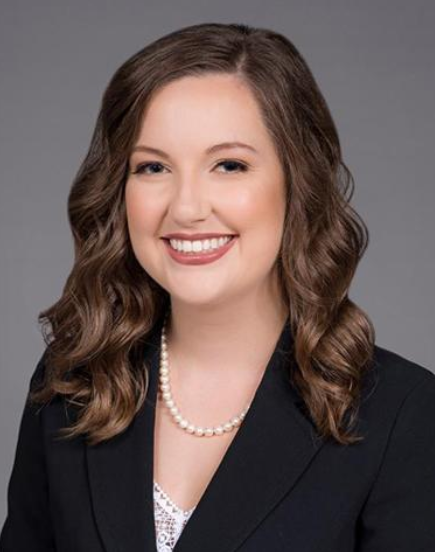
- Featured Physician Interview
Julia S. Spalding, MD
What Is Neonatology?
- Were born prematurely
- Need respiratory support
- Have congenital abnormalities
- Have infections
- Require surgery
- Have difficulty feeding
- Have cardiovascular problems
- Need intensive monitoring
- Experienced complications during delivery
- Require specialized care after birth
The NICU Is Not Just for Premature Babies
Respiratory distress
Infection
Congenital heart disease
Neurologic abnormalities
Gastrointestinal abnormalities
Surgical conditions
Complications surrounding delivery
Other congenital disease
What Conditions Do Neonatologists Treat?
Respiratory Disease
One of the most common problems in the NICU. Premature babies may require mechanical ventilation, oxygen, or other forms of respiratory support.
Surgical Conditions
Some infants are born with gastrointestinal or other abnormalities requiring surgery.
Infections
Newborns can become severely ill from infection and may require antibiotics and intensive monitoring.
Congenital Heart Disease
Some infants are born with structural abnormalities of the heart.
Congenital Abnormalities
These may involve the brain, limbs, gastrointestinal tract, heart, or other organ systems.
The NICU Is Different From Other ICUs
The ICU team may no longer care for the patient after transfer.
From Delivery Room → Home
Birth
Delivery Room Immediate Assessment
Stabilize
Resuscitation Respiratory Support
NICU
Critical Care Complex Physiology
Grow
Nutrition Development Healing
Prepare
Family Education Feeding Home Planning
From the Sickest Day to Going Home
This is one of the most powerful parts of Neonatology.
Some families spend: Weeks. Months. Sometimes more than a year. with the NICU team.
That creates relationships very different from many other critical-care specialties.
Dr. Spalding describes becoming very close with families during long hospitalizations. When those babies are finally discharged, the team may miss them—but they’re also thrilled that the family can finally bring their baby into the outside world.
You don’t only see the crisis. You get to see the recovery.
What Does a Typical Day in the NICU Look Like?
Neonatologist
Supervising attending physician
NICU Fellow
Physician completing subspecialty training
Residents
Physicians completing residency training
Advanced Practice Providers
Nurse practitioners and physician assistants
Bedside Nurse
Provides continuous bedside care
Dietitian
Helps optimize nutrition and growth
Pharmacist
Assists with complex medication management
What Happens Outside of Rounds?
- Managing critically ill infants
- Adjusting respiratory support
- Reviewing laboratory results
- Managing nutrition
- Coordinating specialist care
- Performing or supervising procedures
- Responding to emergencies
- Teaching residents and fellows
- Meeting with families
- Attending deliveries
- Evaluating potential transfers
One Baby, One Team
Neonatologist
Fellow
Resident
Nurse
APP
Pharmacist
Dietitian
Respiratory Therapy
Surgeons
Therapists
Family
The Delivery Room
Longitudinal Care
Months-long relationships and development
Acute Care
Immediate stabilization at delivery
Critical Care
Management of life-threatening illness
How Do You Become a Neonatologist?
4 Years
Medical School
3 Years
Pediatrics Residency
3 Years
Neonatal-Perinatal Medicine Fellowship
Why Choose Neonatology?
01
The Patients
She enjoys caring for newborn infants.
02
Physiology
Neonatal physiology is complex and constantly changing.
03
Attention to Detail
Small physiologic changes can matter enormously.
04
Critical Care
Neonatologists care for extremely sick patients.
05
Development
They watch infants grow and change over time.
06
Families
They support parents through what was supposed to be one of the happiest moments of their lives but has instead become frightening and uncertain.
What Is Rewarding About Neonatology?
Imagine meeting a baby who: Weighs less than a pound. Cannot breathe independently. Requires intensive medical support.
Then caring for that child for months.
Watching them grow. Watching them breathe. Watching them begin feeding. Watching their parents become more comfortable caring for them.
And eventually: WATCHING THEM GO HOME.
That longitudinal recovery is one of the most distinctive rewards of Neonatology.
Caring for Two Patients: The Baby & the Family
Technically, the neonatologist’s patient is the baby.
In reality, excellent neonatal care also requires caring for the: FAMILY.
Parents may have imagined pregnancy ending with: Delivery → Hold Baby → Go Home
Instead, they suddenly find themselves surrounded by:
Monitors
Ventilators
Feeding tubes
Medications
Specialists
Uncertainty
Difficult Conversations in the NICU
Serious diagnoses
Prognosis
Tracheostomy
G-tube placement
Long-term disability
Major changes in expected quality of life
Redirection toward comfort-focused care
I personally see it as an honor to be a person who's trusted enough by a family to have those conversations.
The Long Haul Physician Interview
Being a Calm Presence
Sometimes the neonatologist has developed a relationship with the family over months.
Other times: It’s the middle of the night. The baby has just been delivered. The physician has never met the family before. And the news is devastating.
Dr. Spalding describes trying to serve as a calm presence and comfort during those moments.
Communication isn’t separate from the medical care. It is part of the medical care.
Check your own pulse first before you enter one of those situations.
Control yourself first.
Prognosis
Stay calm.
Use your training.
Then help the patient.
Advice shared by Dr. Spalding
The Long Haul Physician Interview
Neonatologists sometimes enter emergencies knowing almost nothing about the baby.
They may not know the history. They may not know exactly what happened during delivery. They simply have to arrive and act.
Dr. Spalding recalls advice from one of her mentors.
She emphasizes that a neonatologist must remain calm, cool, and collected when everyone else in the room may be experiencing an extremely stressful event.
What Makes a Good Neonatologist?
Detail-Oriented
Neonatal intensive care involves extraordinary attention to detail.
Organized
Her NICU may have 90+ babies at a time, making organization essential.
Calm Under Pressure
Emergencies require clear thinking despite stress.
Compassionate
Parents may be living through an experience they never imagined.
Collaborative
Caring for critically ill infants requires listening to nurses, specialists, advanced-practice providers, therapists, families, and other members of the team.
Comfortable With Complex Physiology
Tiny changes can matter enormously in premature and critically ill infants.
The Parents Are Part of the Team
One particularly complex aspect of Neonatology is decision-making.
The newborn cannot make their own medical decisions. Parents or guardians generally make decisions on their behalf.
Dr. Spalding discusses this through the ethical principle of autonomy, noting that in Neonatology the parents exercise decision-making authority for their child.
That means good neonatal care isn’t simply: Physician decides → Family follows.
Instead, it requires: COLLABORATIVE DECISION-MAKING.
"We're on the Same Team."
Family
Neonatologist
Nurses
Specialists
Nurse practitioners
Physician assistants
Therapists
Other members of the care team
- What is happening?
- What are the options?
- Why is a particular treatment being recommended?
- What does the family want?
- What is in the baby's best interest?
We're on the same team.
The Long Haul Physician Interview
Ethics in Neonatology
Extreme prematurity
Prognosis
Long-term disability
Life-sustaining treatment
Resuscitation
Comfort-focused care
Parental decision-making
Quality of life
Medical uncertainty
Taking the NICU Home With You
Critical illness
Death
Unexpected diagnoses
Complications
Difficult resuscitations
Grieving parents
Physicians Need Support Too
- Debrief with colleagues.
- Talk to mentors.
- Recognize when work is affecting your outside life.
- Seek professional support when needed.
- Maintain relationships outside medicine.
- Build relationships inside medicine with people who understand the experience.
Medicine & Family Life
Her husband
Family
Co-fellows
A supportive community
Teaching in the NICU
Academic Neonatology also involves teaching.
Dr. Spalding describes herself as someone who naturally likes to be hands-on and know everything happening with the patient.
As an attending, however, part of her responsibility is allowing trainees to take increasing ownership. She gets to watch fellows progress from being:
Timid and Uncertain
Developing Procedural Skills
More Independent
The Future of Neonatology
Neonatology is a relatively young specialty.
Dr. Spalding notes that the field developed substantially beginning around the 1960s, meaning enormous advances have occurred within only a few generations of physicians.
One of the clearest examples is: THE EDGE OF VIABILITY.
How Early Can a Baby Survive?
24 wks
~20 years ago
23 wks
~10 years ago
22 wks
Today at her center
Artificial Intelligence in Neonatology
Extremely Premature Infant Outcomes
Helping inform complex counseling and decision-making.
Sepsis
Identifying babies at increased risk.
Chronic Lung Disease
Predicting outcomes such as bronchopulmonary dysplasia.
Other Clinical Outcomes
Using data to better understand risk and prognosis.
Will AI Replace Neonatologists?
Dr. Spalding doesn’t think so.
And her reasoning illustrates something important about Neonatology.
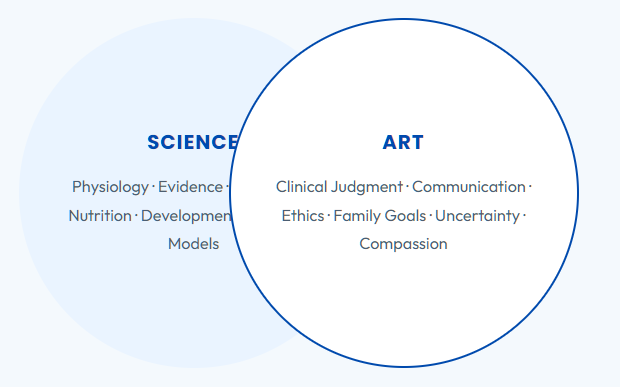
There isn’t always a randomized controlled trial telling the physician exactly what to do for an extremely premature infant weighing less than a pound. Evidence matters enormously. But so do:
Clinical judgment
Experience
Nuance
Family goals
Communication
Ethics
Uncertainty
She describes this as the continued: ART + SCIENCE OF MEDICINE.
AI may help. But Neonatology still requires physicians capable of applying evidence to deeply individual human circumstances.
NEONATOLOGY
What Are Common Misconceptions About Neonatology?
"The NICU is only for premature babies."
False. Dr. Spalding notes that approximately half of the babies in her NICU are full-term.
"Neonatologists only take care of babies immediately after birth."
No. Some babies remain under NICU care for months or even more than a year.
"Once the baby gets better, another team takes over."
Not necessarily. Unlike many adult ICUs, NICU teams may continue caring for infants until discharge home.
"It's basically just Pediatrics with smaller patients."
Neonatology combines Pediatrics with intensive care, complex physiology, resuscitation, developmental medicine, ethics, and family-centered decision-making.
"NICU care is mostly the doctor."
Far from it. NICU care is intensely multidisciplinary.
"Critical care means you don't develop long-term relationships."
The NICU can involve some of the longest relationships in critical care because families may remain with the team for months.
Who Is a Good Fit for Neonatology?
- Love Pediatrics
- Enjoy physiology
- Like critical care
- Are highly detail-oriented
- Stay calm under pressure
- Enjoy working with families
- Like multidisciplinary teamwork
- Want both acute and longitudinal care
- Enjoy procedures
- Like high-acuity medicine
- Are comfortable with uncertainty
- Enjoy teaching
- Want to watch patients grow and develop
- Are interested in ethics
- Like rapidly evolving medical science
- Want meaningful relationships with families
- FAQ
Frequently Asked Questions About Neonatology
What does a neonatologist do?
Is Neonatology part of Pediatrics?
Where do neonatologists work?
Are all NICU babies premature?
How premature can NICU babies be?
Do neonatologists attend deliveries?
Do neonatologists care for babies after they leave intensive care?
Is Neonatology procedural?
Is Neonatology emotionally difficult?
Is Neonatology good for someone who likes physiology?
Is Neonatology good for someone who likes critical care but wants continuity?
Advice for Future Neonatologists
Shadow
Ask questions
Watch a delivery
See rounds
Meet neonatologists
Observe how the team cares for babies and families
Even if you eventually decide Neonatology isn’t right for you, exposure can help clarify what is right for you.
She also offers advice that fits perfectly with The Long Haul.
When you’re a pre-medical student, the finish line can feel impossibly far away.
There is always another: Exam. Class. Application. Interview. Rotation.
Sometimes spending time with physicians and seeing the career you’re working toward provides enough motivation to keep pushing through.
She describes shadowing as something that can refresh you and give you more stamina when the process becomes difficult.