
Explore a Career in Pathology
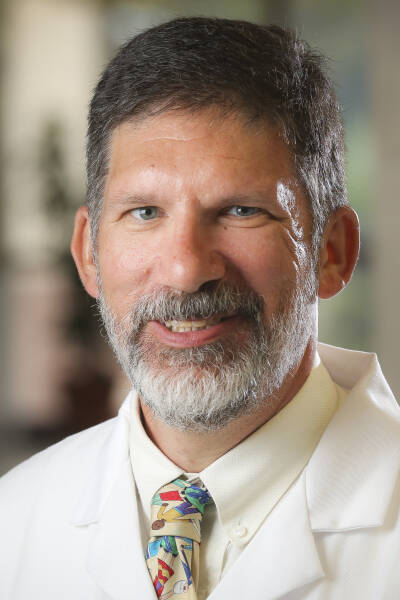
- Featured Physician Interview
Peter R. Peletier, MD
What Is Pathology?
Pathology is essentially the medical science of disease.
Pathologists use laboratory testing, microscopic examination, molecular techniques, and other diagnostic tools to understand what disease process is occurring and provide information that helps other physicians determine treatment. The field is broadly divided into two major areas:
Anatomic Pathology
Tissue • Cells • Biopsies • Microscopy • Surgical Pathology • Forensics
Clinical Pathology
Blood • Microbiology • Molecular • Chemistry • Hematology • Coagulation • Transfusion Medicine
Anatomic Pathology (AP)
Anatomic Pathology focuses primarily on diagnosing disease through the examination of tissues, organs, and cells. This includes areas such as:
Clinical Pathology (CP)
Clinical Pathology focuses on laboratory medicine and includes areas such as:
The interview emphasizes just how broad Clinical Pathology can be, spanning microbiology and molecular science through blood banking, chemistry, hematology, and coagulation.
What Does a Pathologist Do?
There isn't one single answer because Pathology contains many different types of physicians. Depending on their training, pathologists may:
Some pathologists spend substantial time at the microscope.
Others spend much more time working with laboratory data, blood products, molecular testing, hospital systems, and other physicians.
That's one of the biggest things students should understand: There is no single "Pathologist" job.
Anatomic Pathology vs. Clinical Pathology: What's the Difference?
This distinction is fundamental to understanding the specialty.
Anatomic pathologists examine physical specimens to identify disease. For example, after a surgeon removes a suspicious mass, a pathologist may determine:
- Is it cancer?
- What type?
- How aggressive does it appear?
- Are the surgical margins involved?
- Are lymph nodes involved?
- What additional testing is necessary?
Clinical pathologists oversee and interpret laboratory medicine. Rather than focusing primarily on tissue morphology, their work can involve the enormous volume of laboratory information used throughout a hospital.
Dr. Pelletier's career primarily falls within Clinical Pathology, specifically Transfusion Medicine.
What Subspecialties Are Available in Pathology?
Pathology offers an enormous number of focused career paths. Depending on training pathway and interests, these can include:
Surgical Pathology
Diagnosis of disease through examination of surgically removed tissues and organs.
Cytopathology
Diagnosis through examination of individual cells or small groups of cells.
Hematopathology
Focuses on diseases of the blood, bone marrow, lymph nodes, and related tissues. Particularly interesting because it can bridge Anatomic and Clinical Pathology, combining tissue examination with tools such as flow cytometry.
Transfusion Medicine / Blood Banking
Focuses on blood products, transfusion practices, compatibility, transfusion reactions, apheresis, and other aspects of blood-based therapy.
Molecular Genetic Pathology
Uses molecular and genetic information to diagnose and characterize disease.
Medical Microbiology
Focuses on laboratory diagnosis of infectious diseases.
Forensic Pathology
Applies pathology to legal investigations, including determining causes and manners of death.
Pediatric Pathology
Focuses on diseases affecting infants and children.
Neuropathology
Focuses on diseases affecting the brain, spinal cord, peripheral nerves, and related structures.
Dermatopathology
Focuses on microscopic diagnosis of skin disease.
Other Organ-Specific Areas
Pathologists may also develop focused expertise in breast, gastrointestinal, gynecologic, genitourinary, pulmonary, bone and soft tissue, head and neck, and other areas of pathology.
How Do You Become a Pathologist?
A common pathway is:
Many residents complete combined: Anatomic Pathology + Clinical Pathology (AP/CP)
Followed by specialized training in an area such as:
The interview describes combined AP/CP training as a four-year residency, while noting that training structures had changed from the five-year model that existed during Dr. Pelletier's own training.
What Is Transfusion Medicine?
Transfusion Medicine is much more complicated than simply deciding: "This patient needs blood."
Transfusion Medicine physicians help determine:
This can require close collaboration with:
In some situations, the transfusion medicine physician may become directly involved in determining what blood products are safest and most appropriate for a particular patient.
What Is Apheresis?
Apheresis is one of the particularly interesting procedural areas discussed in this interview.
The process uses technology to separate different components of blood.
Depending on the disease being treated, a particular component can be removed while the remaining components are returned to the patient. Blood can be separated into components including:
The treatment can therefore be customized depending on which blood component is contributing to the patient's disease.
How Is Apheresis Used to Treat Disease?
The interview gives two excellent examples.
Sickle Cell Disease
In certain patients with sickle cell disease, abnormal red blood cells can be removed and replaced with donor red cells that do not contain sickle hemoglobin.
This may be used in particular clinical situations to reduce complications.
Thrombotic Thrombocytopenic Purpura (TTP)
In TTP, the problematic component is within the plasma.
Plasma exchange can therefore remove the patient's plasma and replace it with appropriate replacement fluid or donor plasma.
These examples show that Pathology isn't necessarily a passive diagnostic specialty.
Some areas directly participate in therapeutic patient care.
Do Pathologists Interact With Other Physicians?
Constantly.
This is another misconception worth addressing prominently.
Many pathologists serve as consultants to other physicians.
A surgeon may need help understanding pathology results.
An oncologist may need additional molecular testing.
An anesthesiologist may need guidance regarding which blood products are appropriate during a complicated operation.
A hematologist may need help interpreting laboratory abnormalities.
A transfusion medicine physician may need to make recommendations during active bleeding.
Dr. Pelletier described going directly into the operating room, evaluating the situation, and helping surgeons and anesthesiologists determine which blood products would be most appropriate for the patient.
This is an important part of Pathology that students rarely see before medical school.
What Is Rewarding About Pathology?
Pathologists frequently influence patient care without necessarily being the physician standing at the bedside.
In Transfusion Medicine, one particularly rewarding aspect is becoming a trusted consultant for other physicians.
Rather than simply telling another doctor: "No, you can't transfuse that." the goal can be to help answer: "What can we do instead?"
That collaborative role allows the pathologist to contribute directly to difficult clinical decisions.
The interview describes how surgeons and anesthesiologists who initially expected resistance later began proactively calling for help once that clinical relationship and trust had been established.
I'm not afraid to put on scrubs, go into the OR, assess the patients myself and tell the anesthesiologist what best blood products are for this particular situation.
What Is Challenging About Pathology?
One challenge is that pathologists often need to build credibility and strong working relationships with other physicians.
The job isn't simply producing a laboratory result.
The pathologist may need to understand the clinical situation behind that result.
In Transfusion Medicine, for example, answering the literal question another physician asks may not always be enough.
Sometimes the better approach is to understand the entire patient and determine the question that actually needs to be answered.
The interview emphasizes building relationships with surgeons, burn teams, bone marrow transplant teams, fellows, and residents before a crisis occurs.
That highlights an important skill in Pathology: You need to understand both the laboratory and the clinical medicine surrounding it.
Why Choose Pathology?
Pathology can be an excellent fit for someone who loves medicine but is particularly drawn to how disease works.
A Physician's Path to Pathology
Dr. Pelletier's route was unusual.
Before medical school, he worked as a medical technologist, making Pathology a natural early interest.
However, during medical school he was encouraged toward a patient-facing specialty because he interacted well with patients.
He therefore pursued Internal Medicine.
Eventually, he realized that Internal Medicine wasn't the lifelong fit he wanted and returned to what he describes as his "first love" of Pathology.
His career is a useful reminder that choosing a specialty isn't simply about asking: "What am I good at?"
It is also about asking: "What type of work will I actually enjoy doing for decades?"
Do Pathologists See Patients?
This depends heavily on subspecialty.
Many pathologists have limited traditional outpatient patient contact compared with specialties such as Family Medicine, Psychiatry, or Pediatrics.
However, that does not mean every pathologist spends the entire career isolated from clinical medicine.
Certain areas can involve more direct clinical interaction.
Transfusion Medicine and apheresis, for example, can bring pathologists closer to active patient management.
Other pathologists primarily interact with the physicians caring for the patient rather than the patient directly.
The degree of patient contact is therefore highly dependent on the career path.
What Does a Typical Day Look Like?
A pathologist's day depends enormously on subspecialty.
An Anatomic Pathologist Might Spend the Day:
A Clinical Pathologist Might Spend More Time:
A Transfusion Medicine physician may also be called about active patient-care situations.
What Is the Lifestyle Like in Pathology?
Lifestyle depends on practice setting and subspecialty.
In the interview, the schedule described was approximately 50–60 hours per week.
Dr. Pelletier preferred arriving before 7:30 AM because surgical cases begin early and transfusion issues may arise around operative care.
Call was generally home call, rather than requiring him to remain physically in the hospital.
He described the overall arrangement as providing a good balance between professional and home life.
This represents one physician's experience and should not be interpreted as the schedule of every pathologist.
Is Pathology a Good Lifestyle Specialty?
It can be.
Compared with some surgical and hospital-based specialties, many Pathology careers may offer:
However, lifestyle varies depending on:
Students should evaluate the actual career they are considering rather than assuming all Pathology jobs have the same lifestyle.
Is Pathology Competitive?
The interview describes the University of Florida program receiving substantially more applicants and interviewees than available residency positions.
However, one residency program's applicant numbers should not be used to characterize the current national competitiveness of Pathology.
How Much Do Pathologists Make?
Compensation depends on:
The interview discussed approximately $250,000 as a median figure at the time, with starting compensation around 150,000–200,000 and increasing compensation with experience.
Is Blood Banking Really That Complicated?
Yes.
A common misconception is that transfusion medicine is simply: Patient is bleeding → give blood.
The reality is much more complex.
Blood products have different indications, compatibility considerations, risks, and clinical applications.
Transfusion specialists must understand how different components should be selected and used in different clinical situations.
Dr. Pelletier noted that people sometimes seemed surprised that he completed an entire fellowship in Blood Banking and Transfusion Medicine.
His response was essentially that there is far more to the field than most people realize.
This same idea applies to Pathology broadly.
The laboratory may appear simple from the outside.
The medicine behind it is not.
What Are Common Misconceptions About Pathology?
No. Forensic and autopsy pathology are only small parts of an enormous specialty.
Some pathologists spend substantial time using microscopy, but Clinical Pathology includes fields such as transfusion medicine, microbiology, chemistry, hematology, coagulation, molecular diagnostics, and HLA testing.
Incorrect. Pathologists generate and interpret information that influences diagnoses and treatment throughout medicine. Some subspecialties also participate directly in therapeutic decisions and procedures.
Transfusion Medicine is a dedicated medical field involving complex decisions surrounding blood products, compatibility, transfusion reactions, apheresis, and other therapies.
Pathologists often need significant clinical knowledge to interpret findings in the context of an actual patient and effectively advise other physicians.
What Skills Make a Good Pathologist?
You may enjoy Pathology if you:
Different Pathology subspecialties attract different personalities.
Someone fascinated by microscopic morphology may gravitate toward Surgical Pathology.
Someone fascinated by laboratory systems and blood products may prefer Clinical Pathology or Transfusion Medicine.
Someone interested in genetics may pursue Molecular Pathology.
The specialty offers tremendous room to find a niche.
How Important Are Communication Skills in Pathology?
Extremely important.
This is one of the strongest lessons from this interview.
Pathology can sometimes be stereotyped as a specialty for physicians who don't want to interact with people.
That is misleading. Pathologists regularly need to communicate complex information to:
A brilliant diagnosis is less useful if the pathologist cannot communicate its meaning effectively.
Patients aren't our only patients. Our colleagues are our clients also.
What Advice Is There for Future Physicians?
One of the final messages of the interview was to remain well-rounded.
Medical school will teach students medicine.
But becoming a good physician also requires developing skills that aren't necessarily captured by an exam score. These include:
This is particularly relevant in Pathology because the physician may spend much of the day communicating findings and recommendations to other healthcare professionals.
The interview emphasizes that students should deliberately develop these "soft skills" alongside their medical knowledge.
- FAQ